

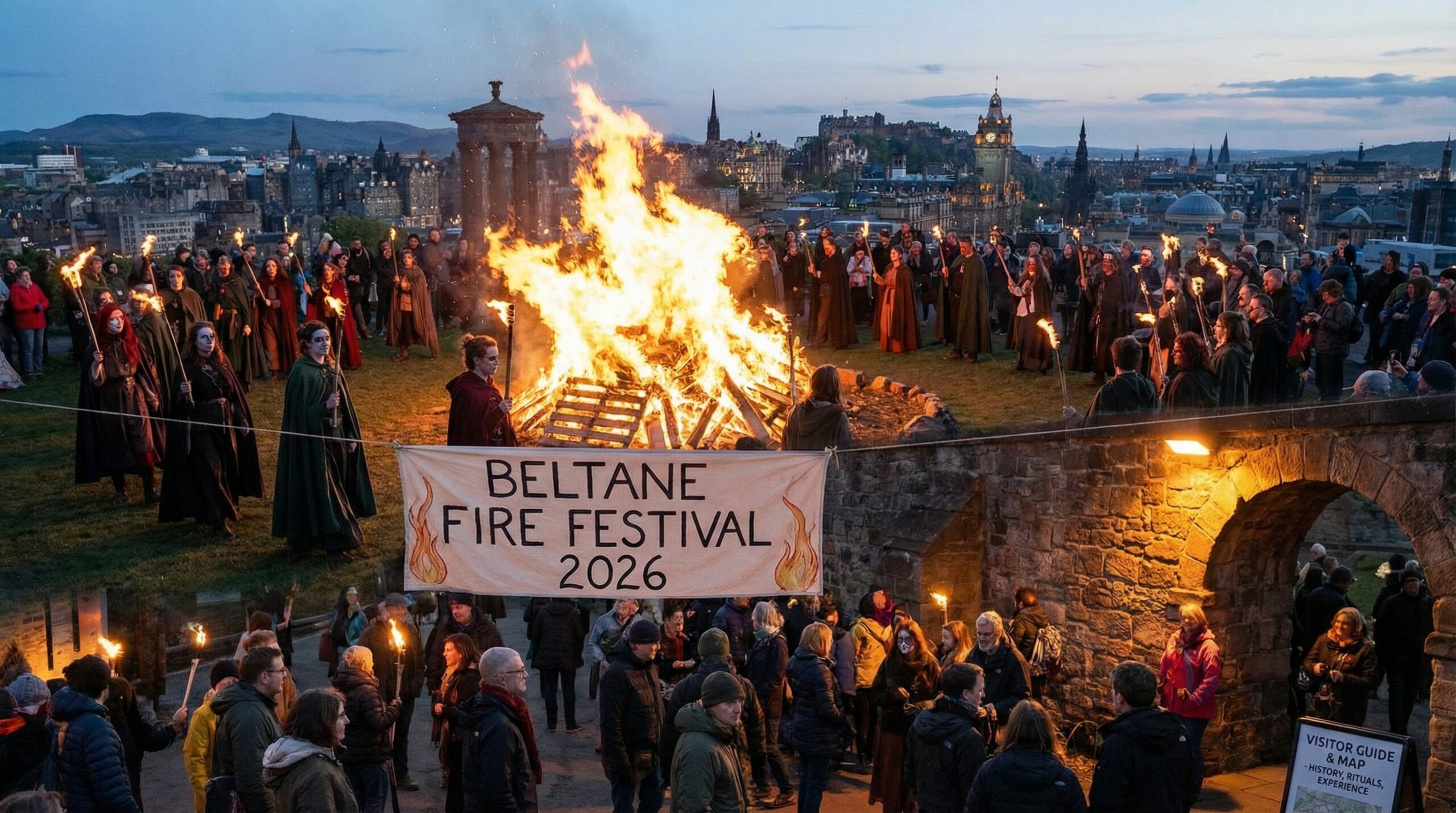
When the sun dips below the horizon on May Day evening, Scotland transforms into a realm of ancient magic and primal celebration. The Beltane Fire Festival, held annually on Calton Hill in Edinburgh, is far more than a modern recreation of Celtic traditions—it’s a visceral experience that connects participants to millennia of human ritual and community. For anyone seeking an unforgettable festival experience steeped in history and raw celebration, Beltane Fire Festival 2026 deserves a prominent place on your travel itinerary.
Understanding Beltane: The Roots of an Ancient Celebration
To truly appreciate what makes Beltane Fire Festival so special, you need to understand its historical foundations. The original Beltane was one of four major Celtic fire festivals, celebrated by the ancient peoples of Ireland, Scotland, and other Celtic regions for thousands of years. The name itself derives from the Celtic god Bel, and “tane,” meaning fire—literally the “bright fire” or “fire of Bel.”
In ancient times, Beltane marked the beginning of summer and served multiple crucial purposes within Celtic society. Farmers would drive their livestock between two purifying bonfires, believing the sacred flames would protect their herds from disease and ensure prosperity. The festival also marked the transition between seasons and served as a liminal time when the boundaries between the physical and spiritual worlds were believed to blur. During this mystical window, people engaged in rituals to ensure good harvests, protect communities from harm, and maintain harmony between the human and divine.
When the Romans conquered most of Europe, Celtic traditions didn’t simply disappear. Instead, they evolved and adapted, often integrating with incoming religious and cultural practices. Similarly, as Christianity spread through Scotland and Ireland, Beltane’s traditions were sometimes absorbed into May Day celebrations, demonstrating the remarkable resilience of cultural practices that meet genuine human needs for celebration and community connection.
The modern Beltane Fire Festival, created in 1988 by a community of performers and artists, represents a thoughtful revival rather than strict historical reenactment. The founders sought to reclaim Edinburgh’s pre-Christian heritage and create a participatory event that honored ancient traditions while remaining genuinely alive and evolving. This blend of historical authenticity with contemporary creative expression is what gives Beltane its special character.The Experience: What Happens at Beltane Fire Festival
Attending Beltane Fire Festival is fundamentally different from watching a typical concert or theatrical performance. This is participatory art on an enormous scale. Approximately 12,000 to 15,000 people gather on Calton Hill each year, and many arrive in elaborate costumes, body paint, and fire-dancer attire that ranges from meticulously researched historical recreation to wildly imaginative contemporary interpretations of Celtic aesthetics.
The festival begins in the late evening, typically around 9 PM, and unfolds in several distinct movements. As darkness falls, Calton Hill becomes illuminated by hundreds of participants carrying torches and LED-enhanced props. The sensory experience is immediately overwhelming—the smell of fire and smoke, the rhythmic beating of drums echoing across the city, the collective energy of thousands of people focused on a shared experience.
The celebration features several key performances and rituals. The festival typically opens with a procession up Calton Hill, with fire performers, musicians, and costumed participants creating an atmosphere of mounting anticipation. The highlight for many is the appearance of the Beltane Beast—an enormous phoenix-like creature built from wood and fabric that emerges from the darkness and becomes engulfed in flames in a controlled but visually spectacular manner. Seeing the Beast ignite is a profoundly moving moment for most attendees; the scale and beauty of the flames create an almost religious sense of awe.
Fire performers are integral to the experience. Skilled dancers with fire poi, fire staffs, and other fire implements perform throughout the evening, their movements creating flowing patterns of light against the night sky. Unlike commercial circus performances, these movements feel spontaneous and organic, with performers often interacting directly with the crowd. The music ranges from contemporary electronic beats to traditional Scottish and Celtic instrumentals, creating a sonic landscape that emphasizes the festival’s bridging of ancient and modern worlds.
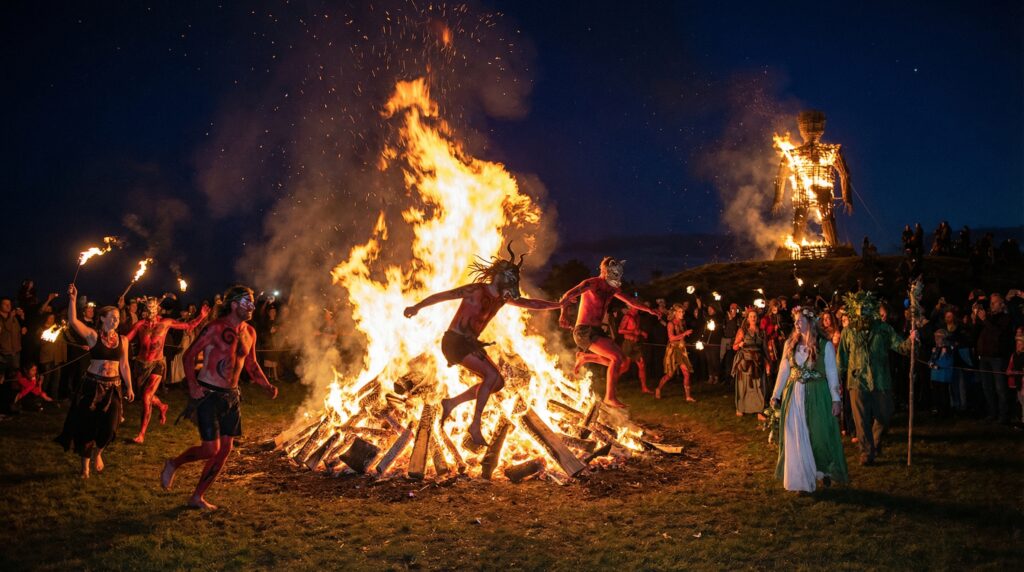
Throughout the evening, costumed performers move through the crowd, embodying various characters from Celtic mythology and contemporary imagination. The Green Man makes appearances, as do various gods, goddesses, warriors, and fantastical creatures. This isn’t passive entertainment watched from seats; rather, the performers interact with spectators, inviting them to participate in the unfolding ritual.The Community and Culture of Beltane
What distinguishes Beltane from many other festivals is its deep commitment to community participation and its explicitly non-commercial ethos. There’s no main stage with celebrity performers. Instead, the festival is organized by volunteers and relies on the creative contributions of participants. This means that attending Beltane is, in some sense, everyone’s responsibility.
Many first-time attendees arrive in regular clothes and simply watch and experience. But seasoned Beltane participants often spend months preparing costumes and planning how they’ll contribute to the festival’s atmosphere. Some coordinate elaborate group performances or processional elements. Others create stunning visual art through costume and makeup. This distributed creative responsibility creates a festival atmosphere fundamentally different from top-down commercial events.
The community aspect extends to the festival’s underlying values. Beltane organizers explicitly emphasize inclusivity, consent, and respect. The community actively discusses and refines its practices year to year, attempting to create a festival environment where people of all backgrounds feel welcome and where boundaries are respected. This commitment to community wellbeing, rather than pure profit maximization, shapes every aspect of the experience.Practical Information for Visiting Beltane Fire Festival 2026
If you’re considering attending Beltane Fire Festival 2026, here’s what you need to know for a successful visit.
When and Where: Beltane Fire Festival takes place on May 1st each year (or the closest weekend if the date falls on a weekday). The festival is held on Calton Hill in Edinburgh, Scotland, a location offering panoramic views of Edinburgh and creating a dramatic natural amphitheater for the celebration.
Getting There: Edinburgh is highly accessible, with Edinburgh Airport offering connections to most major UK and European cities. The city center is about 8 miles from the airport. Public transportation via bus takes approximately 25-30 minutes. Once in the city, Calton Hill is in the heart of Edinburgh’s old town, accessible by various walking routes or public transport.
Accommodation: Book accommodation well in advance. May is a busy tourism season in Edinburgh (though not as intense as festival season in August). Hotels, guesthouses, and Airbnb properties fill quickly. Consider staying in Leith or other nearby neighborhoods if central Edinburgh is fully booked.
What to Bring: Comfortable walking shoes are essential—you’ll be standing for several hours on potentially muddy hillside. Bring weather-appropriate clothing; May in Scotland can be cool and damp. Many attendees wear costumes or festival attire, which is encouraged but entirely optional. If you plan to stay late, bring layers for warmth. A light rain jacket is always wise. Bring a water bottle and perhaps some light snacks.What to Wear: There’s no dress code, but the festival’s atmosphere encourages creative expression through costume and adornment. Many people arrive in elaborate fantasy costumes, traditional Celtic-inspired clothing, body paint, or festival wear. Others come in regular clothes. The key is that wearing distinctive or festive attire enhances your experience and that of others—it contributes to the collective atmosphere of transformation and celebration. If you’re not comfortable creating an elaborate costume, even adding some face paint or festival jewelry can enhance the experience.
Photography and Recording: Photography is generally welcome, though be respectful of performers and other attendees. Be aware that some costumed participants might not want to be photographed or might expect a small contribution if you photograph them.
The Transformative Power of Ritual and Celebration
Why does Beltane Fire Festival matter? What makes it worth traveling to Scotland specifically to attend? The answer lies in something essential about human experience that modern consumer culture often neglects: the profound power of shared ritual.
Research in anthropology, psychology, and neuroscience increasingly validates what humans have intuitively understood for millennia—that participating in collective rituals creates powerful psychological and neurological effects. Group ritual synchronizes people’s nervous systems, creates feelings of social cohesion and belonging, and generates altered mental states that feel transcendent. These aren’t peripheral benefits; they’re central to human wellbeing.
Beltane Fire Festival, even as a modern recreation of ancient practices, taps into these fundamental human needs. The combination of fire, music, movement, community presence, and shared intentionality creates an atmosphere where transformation feels possible. For many attendees, Beltane is one of the most powerful experiences they have in a given year—not because of expensive production values or celebrity performances, but because of the genuine human connection and collective creativity on display.Beyond the Festival: Experiencing Beltane Culture in Edinburgh
If you attend Beltane Fire Festival, you’ll want to maximize your visit to Edinburgh. The city has a remarkable relationship with its pre-Christian past and is worth exploring.
Visit the National Museum of Scotland to learn more about Celtic history and culture. The museum has excellent exhibits on Iron Age Scotland, Celtic art and craftsmanship, and the historical context of Celtic festivals. This background enriches your understanding of what Beltane represents. The curatorial approach in these exhibits demonstrates how ancient traditions shaped what Scotland became and continues to influence Scottish identity.
Explore Edinburgh’s old town on foot. Walking the atmospheric cobblestone streets gives you a sense of the city’s history. Many of these streets follow medieval patterns that align with even older Celtic settlement patterns. Greyfriars Kirkyard, though technically a cemetery, is a fascinating historical site where you can contemplate death and continuity—themes that connect to ancient Celtic spirituality.
Consider visiting Samhain Fire Festival in November, Beltane’s counterpart celebrating the Celtic new year. While smaller and less well-known, Samhain festival carries equally deep significance and offers another opportunity to engage with Celtic traditions. If you become enchanted by Beltane, planning a return visit for Samhain creates a full-circle experience of Celtic ritual through the turning of seasons.
The Challenges and Realistic Expectations
While Beltane Fire Festival is truly special, it’s important to have realistic expectations. The festival can be crowded, with tens of thousands of people on a hillside in the dark. The ground can be muddy. The weather might be cold and damp. The festival has a strong countercultural ethos that might not appeal to everyone—there’s an atmosphere of permission for eccentricity and alternative self-expression that some find exhilarating and others find challenging.
The festival is also explicitly non-commercial. There’s minimal food and beverage available for purchase at the event itself. This reflects the organizers’ values, but means you should eat beforehand and bring water. Plan your evening accordingly, understanding that comfort amenities will be limited.
Finally, while the festival creates a genuine sense of community and belonging, it’s ultimately ephemeral. The magic of Beltane exists in that specific time and place. Attempting to recreate it elsewhere usually fails. However, for some attendees, Beltane awakens something that continues long after the festival ends—a deeper connection to community, nature, and the human capacity for collective transformation.Conclusion: Why Beltane Fire Festival 2026 Belongs on Your Agenda
The Beltane Fire Festival represents something increasingly rare in contemporary culture: a large-scale celebration organized around shared values rather than profit, featuring genuine creative participation rather than passive consumption. It honors a historical tradition while remaining vibrantly alive and evolving. It creates moments of genuine transcendence in our ordinary lives.
Whether you’re drawn to Celtic heritage, fascinated by fire and performance art, seeking deep community experiences, or simply looking for something genuinely different from typical tourism offerings, Beltane Fire Festival 2026 will likely exceed your expectations. Start planning your trip now, book your accommodation, prepare a costume if you’re so inclined, and prepare yourself for one of the most remarkable celebrations in the world.
On May Day evening on Calton Hill, you’ll join thousands of people in keeping alive an ancient human tradition—the gathering around fire to celebrate survival, community, and the eternal human capacity for wonder. You’ll witness fire performers creating art from flame, see costumes that range from meticulously researched historical pieces to wonderfully imaginative contemporary creations, and feel the collective heartbeat of a diverse crowd united in celebration.
The experience will challenge you, move you, and quite possibly change how you understand what’s possible when humans gather with genuine intention. In a world increasingly mediated by screens and commerce, Beltane Fire Festival offers something authentic: the primal human joy of gathering in the darkness with fire, music, and community. That’s worth the journey to Scotland. That’s worth the mud, the cold, and the crowds. That’s worth every moment of your time.
Start making your plans for Beltane Fire Festival 2026 today. Edinburgh awaits, and fire beckons.


Leave a Reply