

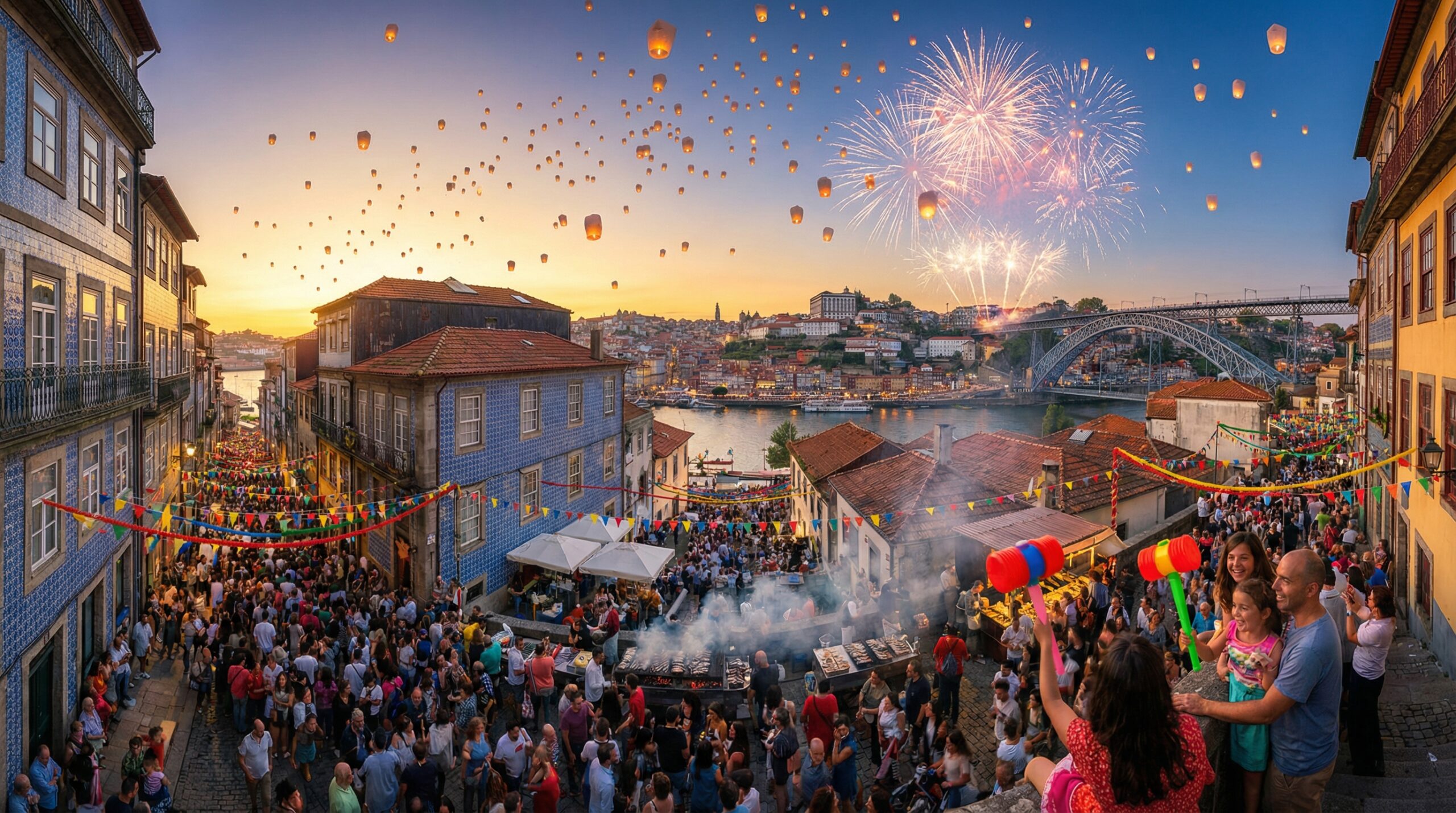
On the night of June 23rd, Porto feels like it’s holding its breath and laughing at the same time. The light fades over the Douro River, the terracotta rooftops turn soft gold, and suddenly you’re surrounded by the smell of grilled sardines and charcoal smoke drifting through narrow lanes. Someone nearby claps a plastic hammer against a stranger’s head—gently, playfully—and instead of getting angry, they grin back. Above you, paper lanterns begin to flicker into the night sky, rising slowly like glowing wishes. This is Festa de São João, Porto’s midsummer festival, and if you love celebrations that feel both wild and deeply personal, this night will stay with you for a long time.
Festa de São João in Porto isn’t just another summer event in Portugal; it’s the night when the whole city turns inside out and lives outdoors. You’ll see families barbecuing outside their front doors, teenagers laughing in clusters on the Ribeira, older couples sitting on folding chairs as if they’ve reserved their spot on the street decades ago. The primary keyword here, Festa de São João Porto guide, is more than a phrase—it’s a promise of how to navigate a celebration that mixes faith, folklore, romance, chaos, and the simple pleasure of staying up until sunrise with people who are genuinely happy to be there.
Where Festa de São João Comes From
If you only saw the plastic hammers, street parties, and beach bonfires, you might think Festa de São João is a modern invention designed for Instagram. The truth stretches much further back, into centuries of midsummer rituals and a complicated dance between pagan tradition and Christian devotion.
Long before anyone thought of Porto as a city for wine tastings and tile-covered facades, people on the Iberian Peninsula celebrated the summer solstice with fire. Bonfires were lit to welcome the warmest season, to purify, to protect, and maybe to give people an excuse to stay out late on the longest days of the year. When Christianity became dominant, many of these fire-based rituals didn’t disappear; they simply found new meaning under the name of Saint John the Baptist—São João.
In Porto, the devotion to São João became especially strong over time. Sailors and fishermen, whose lives depended on unpredictable seas and shifting winds, prayed for protection and gave thanks when they returned safely. The festival gradually blended this religious devotion with the joy of a city that knows how to gather, eat, and celebrate. By the 19th and 20th centuries, São João had become Porto’s defining night—the one evening when class differences, neighborhood boundaries, and everyday worries softened under fireworks and shared rituals.
Today, you’ll still find religious elements—mass, small processions, and people quietly lighting candles—but they coexist with music stages, street bars, and crowds of friends wandering the city until the first pale streaks of dawn. It’s this blend of old and new, sacred and playful, that makes any honest São João festival Porto story feel richer than a simple “things to do” list.
What Actually Happens on the Night of São João
If you’re expecting a neatly organized event with a start time, a clear program, and a tidy end, São João will surprise you in the best way. The festival unfolds like a wave that starts slowly in the afternoon and crashes into full energy around midnight.
Afternoon: The Slow Build-Up
The mood starts to change in the late afternoon of June 23rd. You’ll see vendors setting up grills and stalls, streets being closed to traffic in key areas, and locals carrying bags of charcoal, crates of beer, and bunches of fresh herbs. Around neighborhoods like Miragaia, Bonfim, and the old town near Ribeira, balconies are decorated, and small speakers appear on windowsills or in doorways.
This is when you’ll already notice an important São João symbol: manjerico, the small basil plant. You’ll find stalls selling round, carefully trimmed basil bushes with tiny flags stuck into their soil, often with love phrases or playful verses written on them. Tradition says you should smell the basil by gently rubbing it with your hand and then bringing your fingers to your nose, rather than burying your face directly into the plant. It sounds like a small detail, but it’s one of those gestures that makes you feel like you’re participating, not just watching.
Evening: The City Turns into One Big Street Party
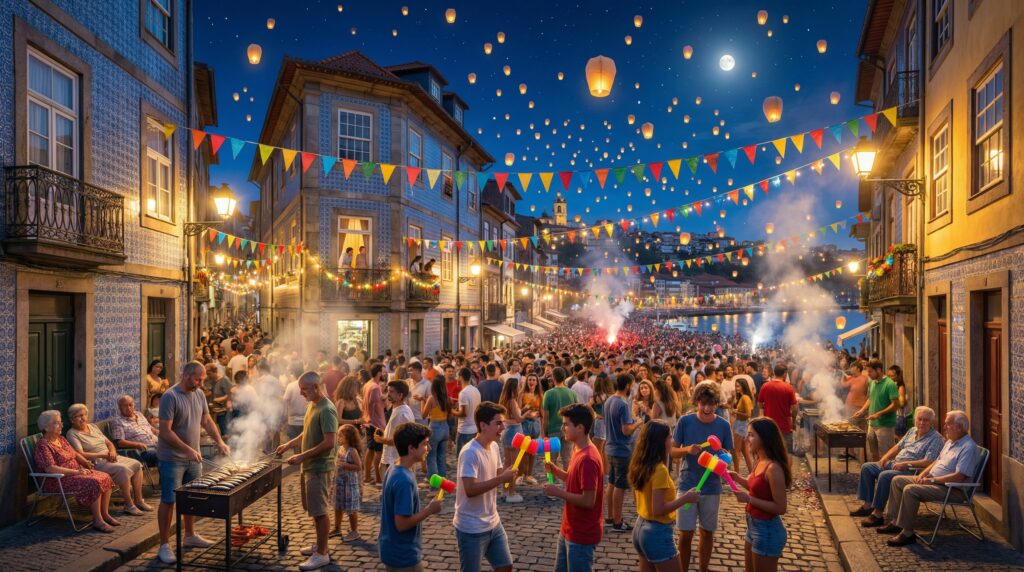
As the sun goes down, everything intensifies. Grills ignite on sidewalks, family barbecues spread into the street, and the smell of sardines and pork lingers in the air. Music spills out from bars and makeshift sound systems, and people start testing their plastic hammers—bate-bate—lightly tapping friends and strangers alike on the head.
The plastic hammer is one of São João’s most iconic modern traditions. Originally, people used wild garlic flowers (alho-porro) or leek stalks to lightly hit others, a playful gesture meant to bring luck or flirtation. Over time, the colorful toy hammer replaced the herbs in many places, making a cheerful squeak with every tap. You’ll still see both: some locals carry leeks and tap you with a mischievous smile; others brandish hammers that light up or make noise.
In the historic center and along the riverfront in Ribeira, the streets become so full that you almost float with the crowd. Stages are set up in various squares with live bands playing traditional Portuguese music, pop, and everything in between. You might stumble onto a small group dancing in a circle to folk tunes, then turn a corner and see people singing along to a local rock band.
Midnight: Fireworks Over the Douro
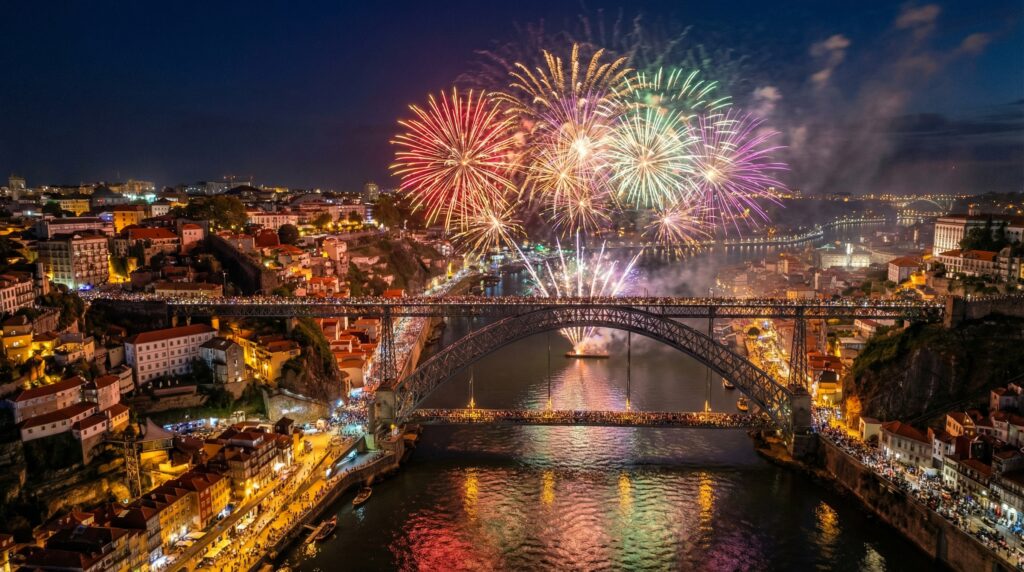
Just before midnight, attention shifts towards the river. People pack onto the Dom Luís I Bridge, line the Ribeira waterfront, and claim spots on the opposite bank in Vila Nova de Gaia. There’s an excited hum, the quiet rustle of thousands of people repositioning for a better view, and then the first firework pierces the sky.
The fireworks show is one of the most anticipated parts of São João. Against the backdrop of Porto’s stacked hills and the graceful lines of the bridge, the bursts of color feel almost impossibly dramatic. For about 15 to 20 minutes, the city’s chaotic noise transforms into a collective gaze upwards. You can hear gasps, laughter, and the occasional squeal when a particularly loud firework cracks overhead.
After Midnight: Lanterns, Walking, and the Pull of the Sea
Once the official fireworks end, the night doesn’t. This is when you’ll see one of São João’s most poetic sights: paper lanterns, called balões de São João, rising slowly into the sky. People light a small flame inside, hold the lantern as it fills with warm air, and release it when it feels buoyant enough to drift. Each one glows like a tiny hot-air balloon and disappears into the dark, as if carrying someone’s wish or unspoken thought.
Many people then start walking in the direction of the sea. It’s a local tradition to end the celebration on the beaches of Foz do Douro and Matosinhos. There, bonfires burn on the sand, music continues, and more informal rituals take place—like jumping over small fires for good luck or dipping your feet in the chilly Atlantic before sunrise. Not everyone goes this far, but if you have the energy, joining this slow migration from the city center to the ocean is one of the most magical ways to feel the full arc of the night.
The Food and Drink of São João: Smoke, Salt, and Simple Happiness
If you love food, Festa de São João will make you very happy very quickly. This isn’t a night for elegant, plated dishes or quiet restaurant dinners; it’s all about smoky grills, paper plates, and eating standing up with a drink in one hand. Any Porto midsummer festival guide that ignores the food would miss half the story.
Grilled Sardines (Sardinhas Assadas)
The star of São João’s menu is the grilled sardine. Throughout the evening, you’ll see rows of sardines laid over charcoal grills, their silver skins blistering and crisping, the air thick with that unmistakable seaside aroma. Traditionally, sardines are served simply—sprinkled with coarse salt, placed on a slice of rustic bread or alongside boiled potatoes and peppers.
There’s a very local way of eating them: you let the fish sit on top of the bread so that the fat and juices drip into it, turning the slice beneath into something rich and deeply flavored. You eat the sardine, then the bread, and feel like you’ve been handed an edible postcard from the Atlantic.
Pork, Caldo Verde, and More
Sardines may be iconic, but they’re not alone. Many stalls and homes prepare grilled pork cutlets, bifanas (thin marinated pork in a bread roll), and other meats. You may also come across caldo verde, Portugal’s comforting green soup made with potatoes, kale, and slices of chouriço sausage. It’s simple, soothing, and exactly what you crave somewhere around 2 or 3 a.m. when the night catches up with you.
Some families and local associations set up long communal tables with a mix of homemade dishes: rice salads, marinated carrots, olives, cheese, and bread. If you’re invited to sit, you quickly realize this festival isn’t just about spectacle—there’s a strong sense of hospitality and sharing.
Sweet Treats and Street Snacks
Don’t overlook the sweets. You might find farturas (similar to long churros) dusted in sugar and cinnamon, sold from big street stands where the dough is piped directly into bubbling oil. There are also stalls with cotton candy, roasted nuts, and other classic fairground treats, which kids and adults happily line up for.
What You’ll Be Drinking
Beer is everywhere—plastic cups of cold lager are practically part of the dress code. You’ll also see bottles of vinho verde (a light, slightly sparkling young wine typical of northern Portugal) on tables, along with red wine and the occasional bottle of port. Some stalls sell simple cocktails and pre-mixed drinks, but the focus is more on relaxed, easy sipping than craft mixology.
If you want a non-alcoholic option, look for juices, soft drinks, or even simple water bottles sold from small coolers on the street. With so much salty grilled food around, staying hydrated is one of the smartest Porto festival travel tips you can actually follow.
The Music, Dance, and Art of the Night
São João doesn’t have a single official soundtrack—but it has a very distinct soundscape. Think of it as layers of music and noise that change as you move through the city.
Live Stages and Traditional Sounds
In different squares and neighborhoods, stages host live bands playing popular Portuguese music, including pimba (catchy, often humorous songs that get everyone singing along), folk tunes, and contemporary hits. You’ll see couples dancing close, groups jumping around, and children twirling with plastic hammers in their hands.
In some areas, especially where local associations organize their own arraiais (small street parties), you may find folk dances and traditional songs with accordions, drums, and guitars. People dance in circles, clap along, and sometimes pull shy onlookers into the rhythm.
Street Performers and Visual Details
Beyond the stages, the festival has a visual artistry of its own. Streets are decorated with streamers, paper flowers, and colorful garlands hanging between buildings. Hand-painted signs can mark neighborhood events, and improvised altars to São João might appear outside houses, decorated with candles, flowers, and images of the saint.
The paper lanterns themselves are part of the night’s accidental art, dotting the sky like soft orange stars. Watching them rise in clusters, then slowly separate as they drift higher, is strangely hypnotic.
The Feel of the Crowd
One of the most striking parts of São João is not a specific performance, but the way the crowd behaves. People are generally in a light, joking mood. They tap each other with hammers, pose for photos, share drinks, and laugh loudly. Even the chaos feels gentle—there’s a sense that this is a night for joy, not for showing off or being aggressive. That atmosphere becomes part of the festival’s living art, shaping your memory of how it felt to be in Porto on June 23rd.
Hidden Gems and Local Tips for São João in Porto
A good Festa de São João Porto guide isn’t just about what everyone does; it’s about the small choices that make your night unforgettable. Locals have their own habits and favorite spots, and borrowing a few of them will make you feel less like a tourist and more like a temporary neighbor.
Where to Watch the Fireworks (Beyond the Obvious)
Most visitors instinctively head to Ribeira or the lower levels of the Dom Luís I Bridge. The view there is spectacular, but so are the crowds. If you don’t mind being packed in with thousands of people, it’s a thrilling option.
However, many locals choose slightly higher or less obvious viewpoints. Some head to the upper deck of the bridge earlier in the evening and stake out a spot along the rail. Others find terraces or viewpoints in the hills above Ribeira, such as near Jardim do Morro on the Vila Nova de Gaia side. From there, you can see not only the fireworks but also the glow of the entire city beneath you. Arrive well before midnight if you want a good view.
Eat with Neighbors, Not Just at Big Stalls
Instead of only relying on the main commercial food stalls, look for smaller neighborhood gatherings—places where local associations or families are grilling sardines and pork and selling plates for charity or community funds. The food is often more homemade, the atmosphere more intimate, and the prices fair. It’s a chance to sit down, talk, and feel the festival at street level.
What to Wear (And What to Carry)
Comfortable shoes are non-negotiable. You’ll be walking on cobblestone streets, up and down hills, and possibly all the way to the beach. Light layers work best—early evening can be warm, but near the river or later at the coast, the breeze can feel surprisingly cool.
A small bag or crossbody backpack is ideal. Keep your hands free for food, drinks, and, of course, your own plastic hammer. Bring some cash, as many smaller stalls may not accept cards. And consider packing a light jacket or scarf and maybe a reusable water bottle to keep yourself balanced through hours of excitement.
Follow the Flow to the Ocean
If you’re unsure what to do after the fireworks, simply follow the flow of people heading west. The walk from central Porto towards Foz do Douro can be long, so you might want to take a tram, bus, or taxi part of the way and then walk the rest. On the beaches, you’ll find bonfires, gatherings of friends, and a more relaxed, open-space atmosphere than in the tight streets of Ribeira.
Some locals like to welcome the sunrise by the ocean, whether standing barefoot in the surf or wrapped in a jacket, holding a final drink while the first light stretches across the water. It’s not an official ritual, but it feels like an unspoken one.
The Deeper Meaning of São João for Porto
It’s easy to describe São João in terms of hammers, sardines, and fireworks—but underneath that playful surface, this festival carries a quieter emotional weight for Porto’s people.
On one level, São João is about gratitude and hope. For centuries, communities tied to fishing and the sea have relied on the blessings of their saints. Lighting candles or lanterns, praying at small altars, and sharing food with neighbors are ways of expressing thanks for what the year has brought and asking for gentle seas ahead—literally and figuratively.
On another level, São João is about belonging. Families who have moved away return for the night. People who grew up in Porto and now live abroad plan their visits around June 23rd, not just for the spectacle but for the chance to feel the city’s heartbeat synchronized with their own. For younger generations, it’s also a moment of personal memory—first late-night adventures, first big group celebrations, sometimes even first kisses under fireworks.
There’s also something powerful about the way São João softens social barriers. On this night, the city becomes more horizontal: rich and poor, locals and visitors, old and young all share the same streets, the same grills, the same music. You can be a stranger and still be pulled into a circle dance, handed a plate of food, or tapped on the head with a hammer and invited to laugh along.
The ritual of sending lanterns into the sky adds a layer of personal introspection. It’s hard to watch those fragile lights rise and not think about your own wishes: what you want to leave behind in the year that has passed and what you hope for in the one that’s coming. In that sense, São João feels less like a party you attend and more like a living tradition you briefly inhabit.
How to Experience Festa de São João in Porto as a Visitor
Yes, you can absolutely join São João as a visitor—and you should. With a bit of planning and the right mindset, this Festa de São João Porto guide can turn a potentially overwhelming night into a deeply memorable one.
When It Happens
Festa de São João is celebrated on the night of June 23rd to 24th, every year. Festivities build up throughout June, but the main event—the street parties, fireworks, and all-night celebrations—takes place from the evening of the 23rd into the early hours of the 24th.
Where to Stay
If you want to be close to the action, look for accommodation near the historic center, Ribeira, or Cedofeita. Keep in mind that it will be noisy; earplugs are a wise investment if you plan to sleep before sunrise. If you prefer to enjoy the festival but retreat to somewhere calmer afterward, consider staying slightly further out in quieter neighborhoods and commuting in.
Getting Around
Public transport often runs later than usual during São João, but services can be very crowded. Walking is often the most reliable way to move around central Porto on this night. Streets are closed to cars in many key areas, and taxis or ride-hailing services might struggle to reach the busiest zones. Wear comfortable shoes and treat the city as your open-air festival ground.
Practical Survival Tips
- Eat early and often: Don’t wait until peak hours to get food; lines grow long around 9-11 p.m.
- Choose a meeting point: If you’re with friends, pick a clear landmark to regroup in case you get separated.
- Be patient: Crowds are part of the experience.
- Embrace the playfulness: Expect to be lightly tapped on the head by plastic hammers; it’s friendly, not aggressive.
Costs and Budget
You can experience São João on almost any budget. The street party itself is free. You’ll mainly pay for food, drinks, and maybe a lantern or hammer. There are often organized dinners or river cruises for the night, which can be more expensive but offer structured experiences with set menus and reserved views of the fireworks. If you prefer a more spontaneous night, walking and eating at stalls is not only cheaper but sometimes more fun.
FAQ: Festa de São João in Porto — Everything You Need to Know
Q1: When exactly is Festa de São João in Porto?
A: Festa de São João is celebrated every year on the night of June 23rd, leading into June 24th. While you may find smaller events and decorations throughout June, the big celebration—with fireworks, street parties, grilled sardines, and late-night walks to the beach—happens from the evening of the 23rd until dawn on the 24th.
Q2: Is Festa de São João suitable for families with children?
A: Yes, many local families bring children to the celebrations, especially earlier in the evening. Kids love the toy hammers, lanterns, and fairground-style treats. However, the crowds can get very dense in the historic center and near the riverfront later at night, so if you’re with young children, it’s wise to enjoy the early part of the festival, watch the fireworks from a slightly less packed viewpoint, and consider heading back before the peak late-night hours.
Q3: Do I need to buy tickets for São João events?
A: The main street celebrations, fireworks, and general atmosphere of São João are completely free—no ticket required. You simply walk outside and join in. That said, some special experiences, like set-menu dinners, rooftop parties, or Douro River cruises with a view of the fireworks, do require advance booking and can sell out quickly. If you’re planning something more structured, reserve well ahead of June.
Q4: What should I wear to Festa de São João in Porto?
A: Wear comfortable, casual clothes and shoes that can handle cobblestones and a lot of walking. Early evening can be warm, but when you’re near the river or the ocean later on, it can feel chilly, so bring a light jacket or sweater. There’s no strict dress code—locals mix anything from jeans and sneakers to slightly dressier outfits—but practicality beats style on this night.
Q5: Is it safe to walk around during São João?
A: In general, São João has a friendly, festive atmosphere, and many locals, including families and older people, feel comfortable staying out late. As with any large event, it’s smart to stay aware of your belongings, avoid extremely drunk or rowdy pockets of the crowd, and keep your phone and wallet secure. Stick to well-lit, busy areas, especially if you’re walking towards the beaches in the early hours, and consider moving in a group if you’re going far from the center.
Q6: What’s the deal with the plastic hammers?
A: The plastic hammer, or bate-bate, is one of São João’s most iconic traditions. Originally, people used wild garlic flowers (alho-porro) or leek stalks to lightly hit others as a playful gesture meant to bring luck or flirtation. Over time, the colorful toy hammer replaced the herbs in many places. If someone taps you lightly on the head with a hammer or leek, it’s friendly—it’s a way of welcoming you into the festival spirit. Just smile back and join in.
Closing Thoughts
Festa de São João in Porto isn’t a festival you simply visit—it’s one you live. You’ll wake up the next morning with charcoal smoke in your clothes, the echo of laughter in your ears, and the memory of paper lanterns rising into a dark sky. You’ll remember the taste of grilled sardines on crusty bread, the sound of a thousand people singing together, and the way the city felt different for one night—softer, kinder, more alive.
What makes São João special isn’t just the fireworks or the hammers or even the food, though all of those things matter. It’s the way Porto opens its doors, invites everyone in, and reminds us what community can feel like when we let down our guard and enjoy each other’s company. Whether you’re a first-time visitor or someone who’s been coming back for years, this festival has a way of feeling both deeply personal and completely universal at the same time.
So if you ever find yourself in Portugal in late June, don’t just visit Porto—let Porto visit you. Wander the streets, taste the sardines, dance with strangers, and let a paper lantern carry your wish into the night. That’s when you’ll understand what São João is really about.


Leave a Reply